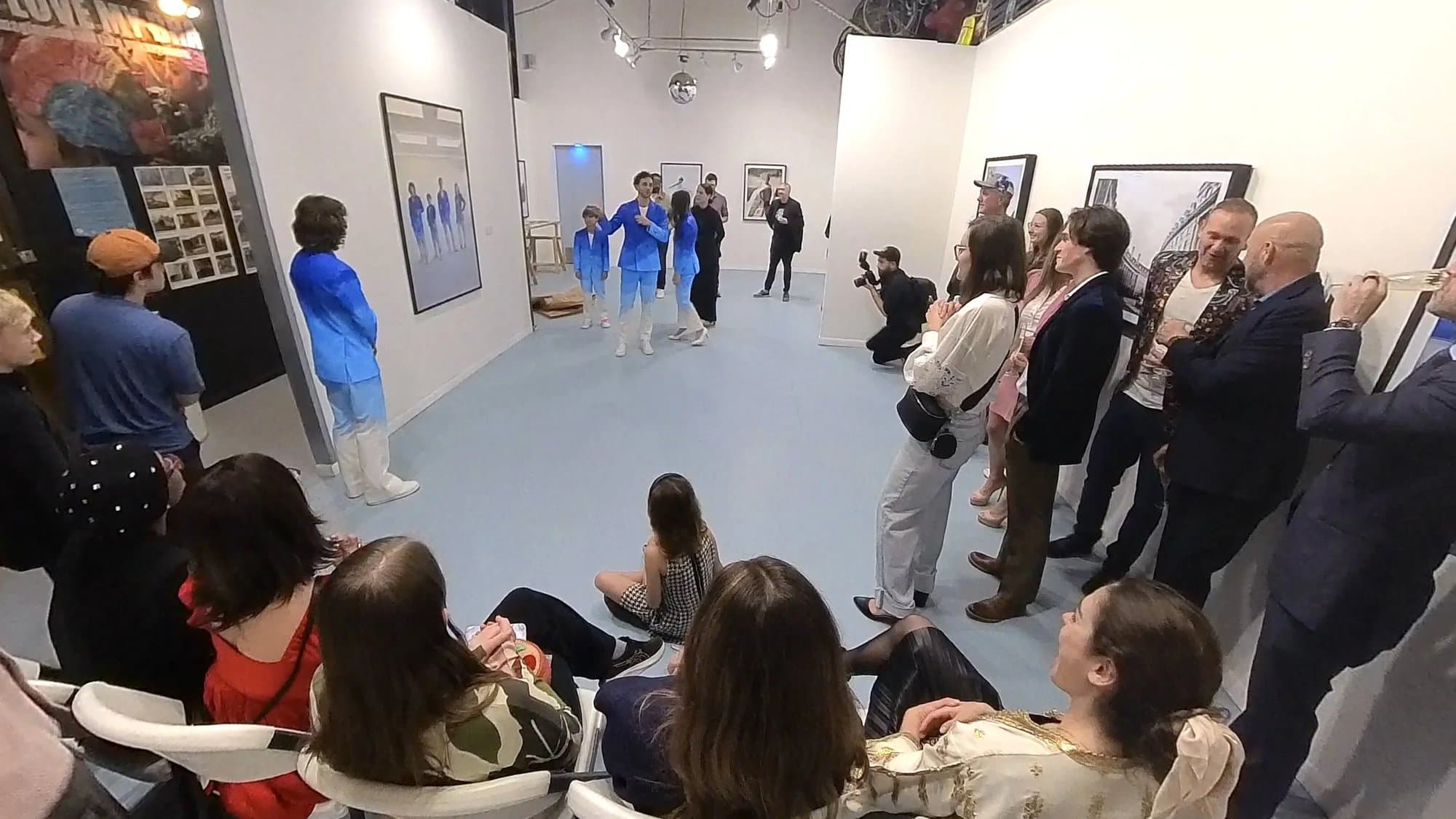
TIMELESS is my first public experiential futures exhibit. It explores intentional living, legacy, thinking in decades, embedding physical objects with digital memories, and what it means to “meet the moment” of future memories. It serves as both an art exhibition and a foresight laboratory.
This exhibit showcased work created throughout my 30s. It was presented as a traditional art gallery with a seemingly invisible experience, showcasing a future in which physical objects have perceived memory through linked digital content. It was also showcasing how it feels to have technology truly blend into the background.
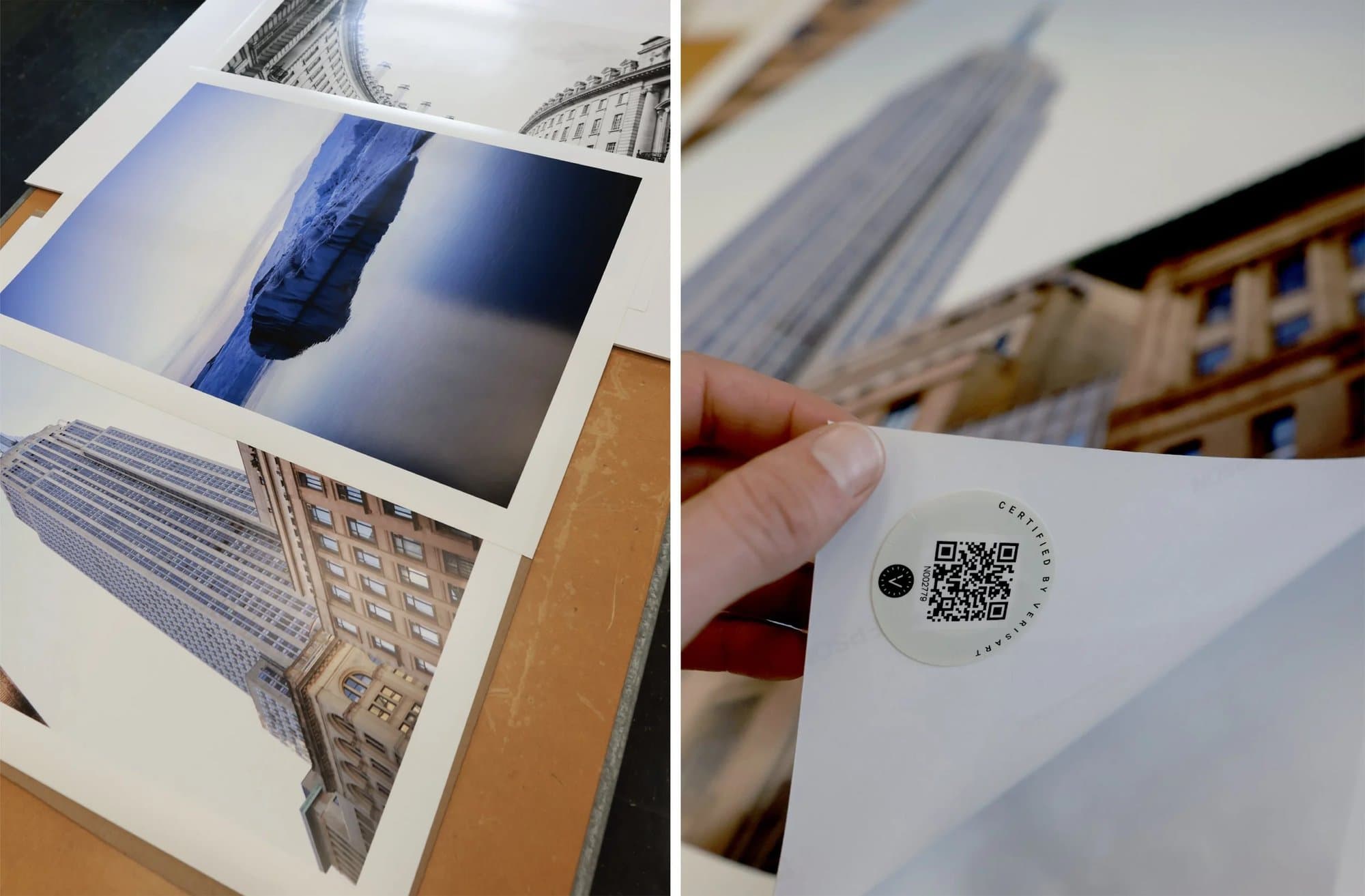
Each image had a secure NFC/QR tag affixed to the back, linking directly to the permanent, blockchain-verified Certificate of Authenticity (COA), ensuring the artwork’s provenance remains with the piece over time and can be verified instantly with an NFC-enabled device. This was part of linking physical objects to digital content.
PHYSICAL OBJECTS WITH DIGITAL MEMORIES
I really loved playing with the idea of what if physical objects could carry digital memories. That was the baseline idea for the interactions. I was driven by my research into the art industry and by uncovering the systems art collections use to track each piece and demonstrate provenance. Realizing it was a combination of physical elements (Certificate Of Authenticity-COA, exhibition checklist which holds the system for collection details) and marking the object themselves (writing directly on the back of the art piece-collection ID, Date, signature, and exhibit stamp-proof item hung in the exhibit). I wanted to create a system for embedding technology that could travel with an art piece and serve as an entry into a digital realm tied to it.
I also didn’t want to make it feel tech-centered. I wanted it to feel connected to the present day, not futuristic. So I wanted to ground the exhibit in a traditional photo gallery and have the pieces serve as objects that connect you back into the digital experience tied to each piece.
THE EXPERIENCE
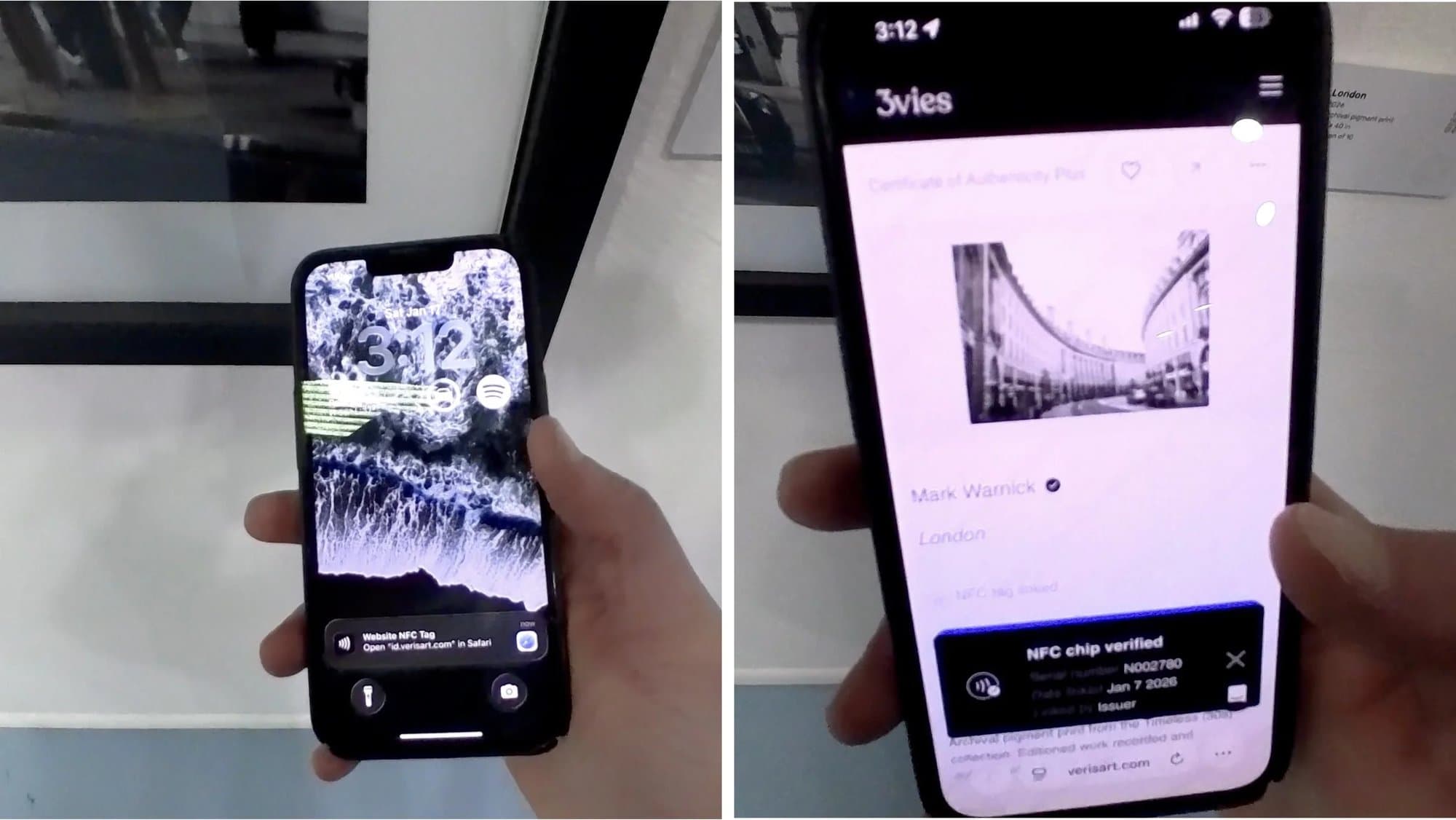
Above, you can see an example of being in the gallery, where the person approaches the London print, scans the bottom-right corner of the print, and it automatically opens the print to the blockchain COA or even the blockchain transaction.
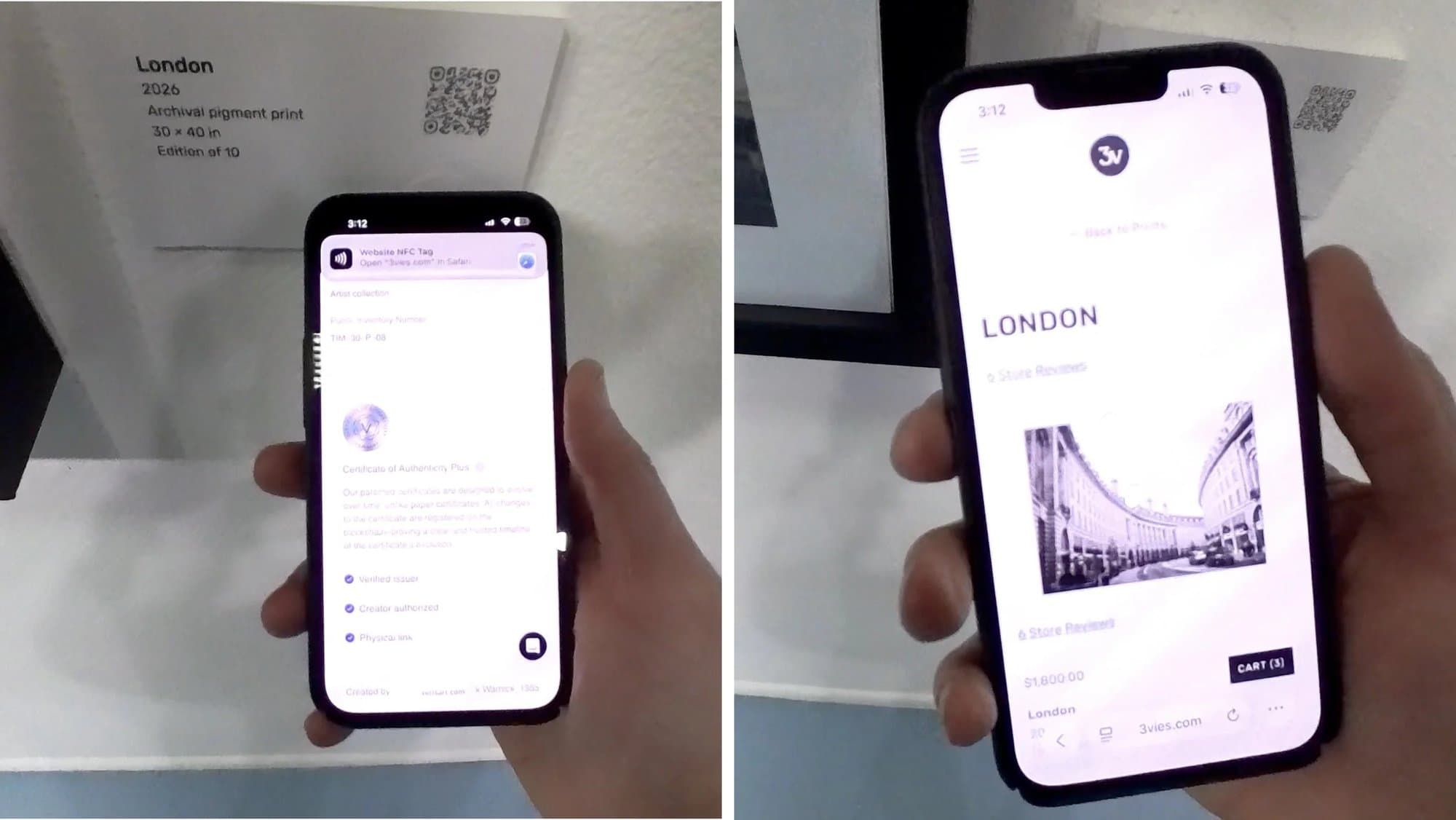
Then they scan the wall label NFC tag, which takes them to the website where they can purchase a print. A QR Tag was added as a fail-safe in case NFC wasn't working. It is also better known, and people know they can scan it, making it more inviting to discovery than NFC.
THE LABORATORY
FIRST—This was more than an art exhibit or showcase of the art I created throughout my 30s. It was, in fact, a laboratory for understanding what it would take to bring an installation into reality. This experience was also an investment in understanding the art world—both in showing it and collecting it—and in exposing some invisible systems for navigating the industry. It was an investment in my future. This is the first of many experiences to come.
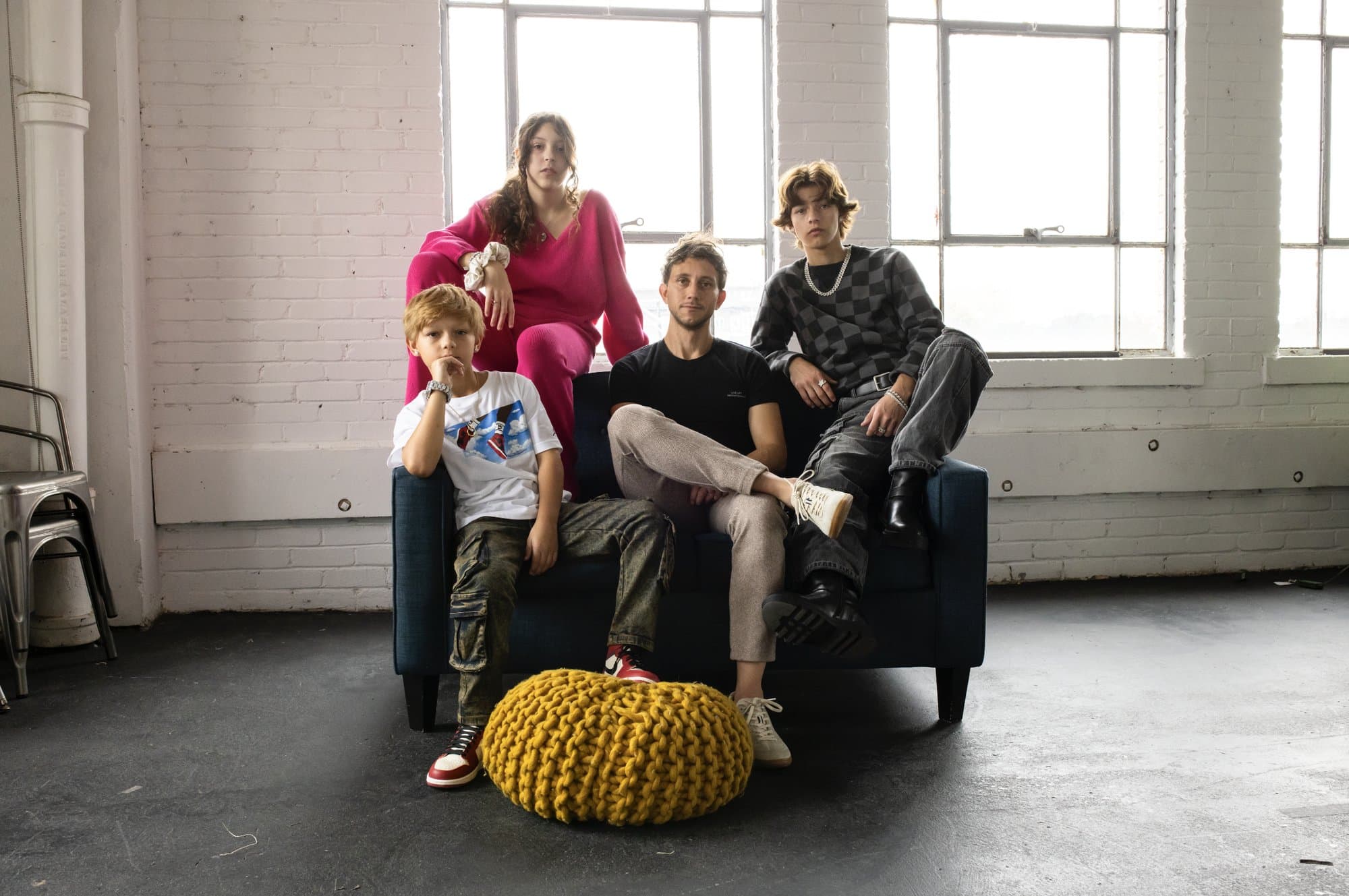
SECOND—It was also a laboratory for teaching my children. We spent the last three years planning this together. We as humans learn best by doing. This project was a chance to help my children identify with their creative centers and build their confidence in trusting their own creative inspirations. I believe it will be a tool that will guide them in their long and creative life ahead.
Wearable Art
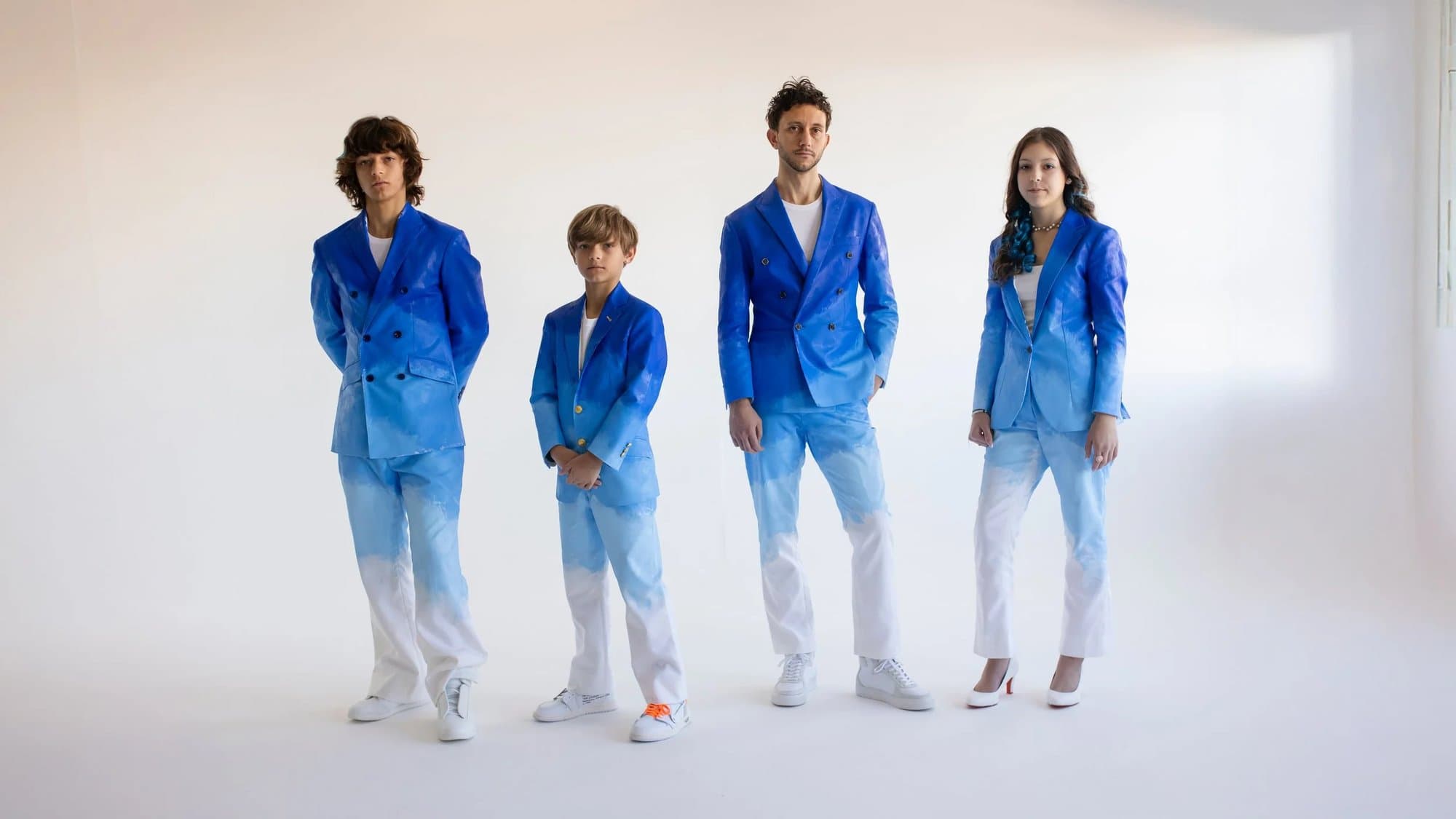
My children and I design custom, 1-of-1 hand-painted tailor-made suits in partnership with Limatus Bespoke. For more details about the suites and see more behind the scenes check out the timeless page.
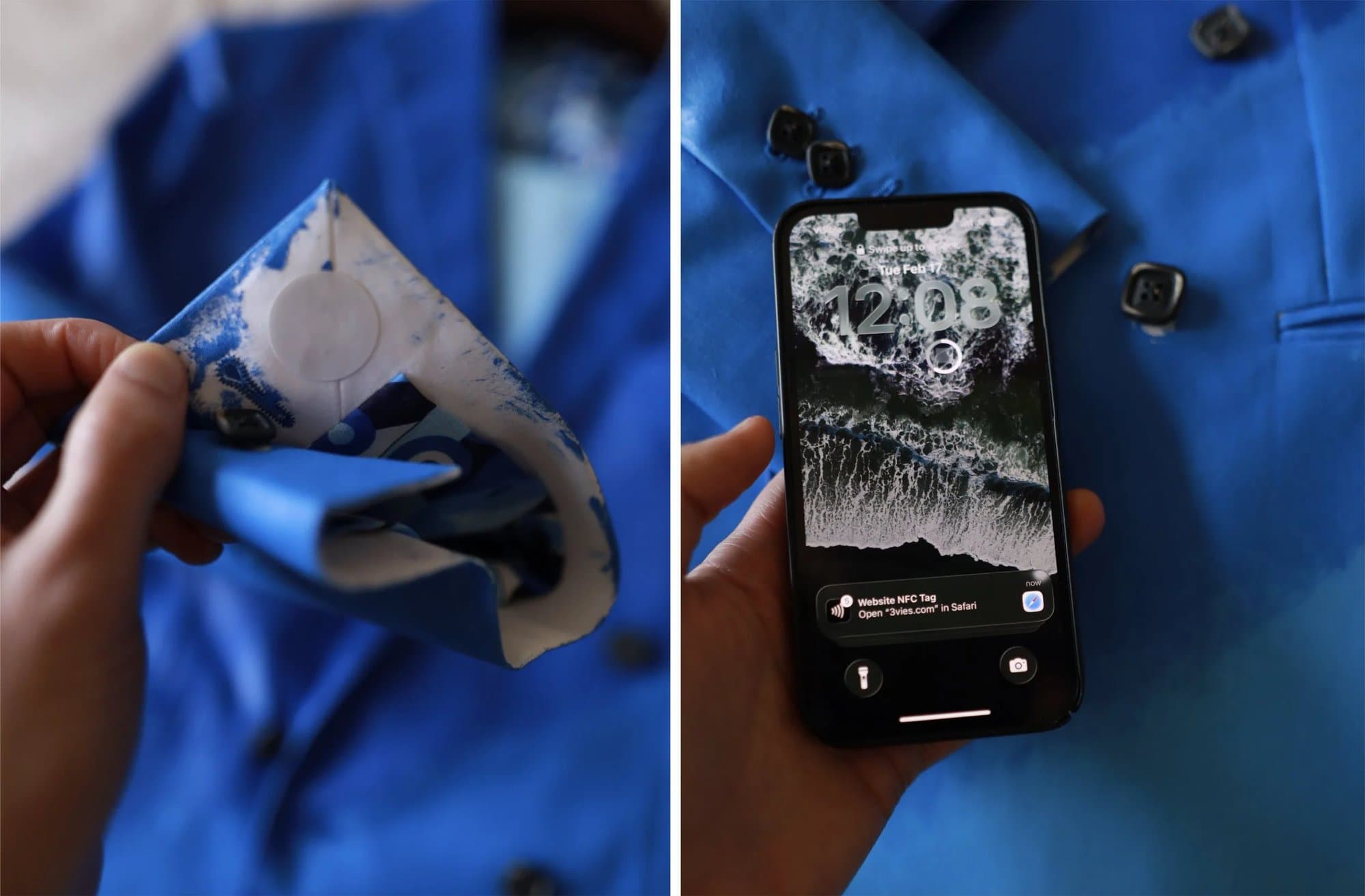
I had wanted to add an embedded NFC tag into the clothes so that during the night, as we walked about and interacted with friends, we could talk about the NFC tags, and it would show them how it worked, which would then spur them to go discover more by scanning the photos and wall labels. We achieved this with a simple NFC chip that adhered to the right cuff. This provided another layer of embedded technology that was invisible until you interacted with it.
Designing Systems
As I mentioned before, in my research for creating a traditional photo exhibit, I learned what artists, museums, and art collectors look for or create. There is so much more that goes into building, tracking, and properly updating an art collection. I wanted to share what I created.
FIRST—It all started with a job I did a few years ago. I was hired by my friend to photograph a private art collection. The company that hired us required us to photograph the front and back of each piece. I asked why they wanted to capture the back, and was informed that many of the pieces have information and identity written on the back. I later researched and found that it was part of the art piece's provenance.
So I originally just wanted to create a stamp for the back that would show which piece hung in the 30s exhibit, because I planned to do an exhibit of that decade every decade, then do one of all the decades. So when I turn 50, I will show work in my 40s, then have a show that spans my 40s and 30s. When I turn 60, I show work in my 50s, then work across my 30s, 40s, 50s, and so on. So I wanted a way to know which pieces hung in which exhibit. Then I started creating a collection stamp to indicate it was from the 30s.
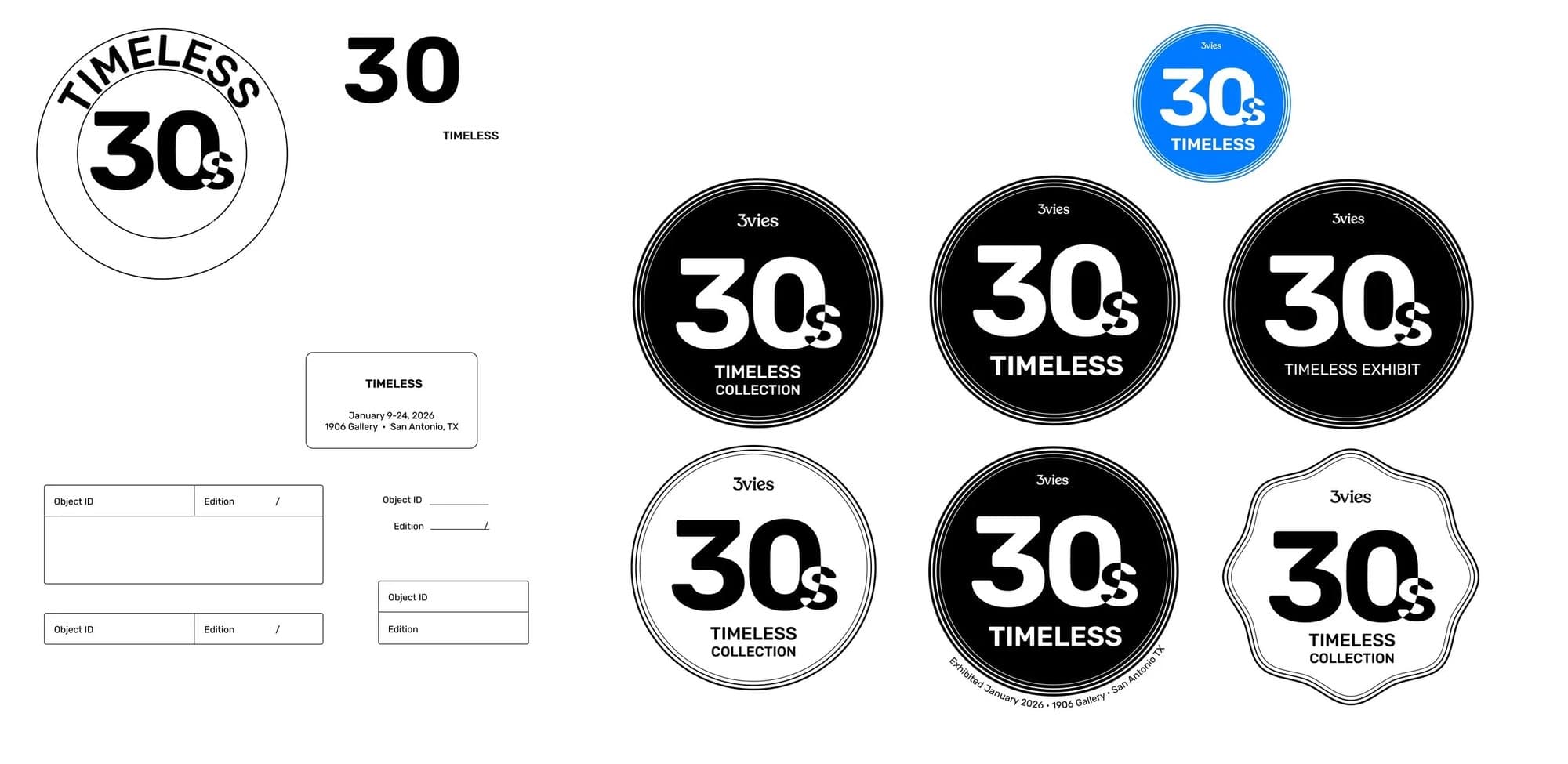
Here are the different stamp designs I was toying with.
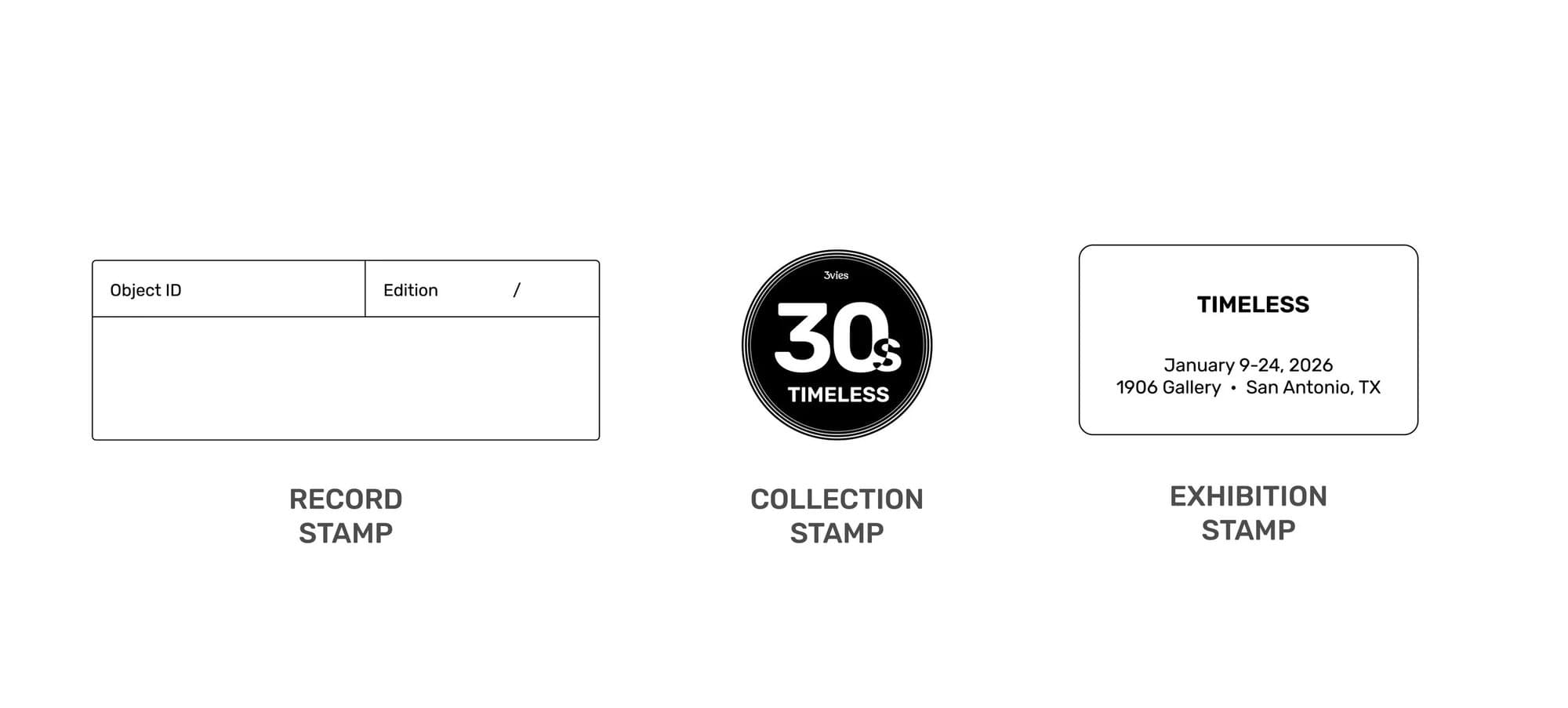
Here are the final 3 I landed on. The record stamp came up in my research, and I learned that keeping physical markings on the art is a fail-safe if they lose the COA with the details.
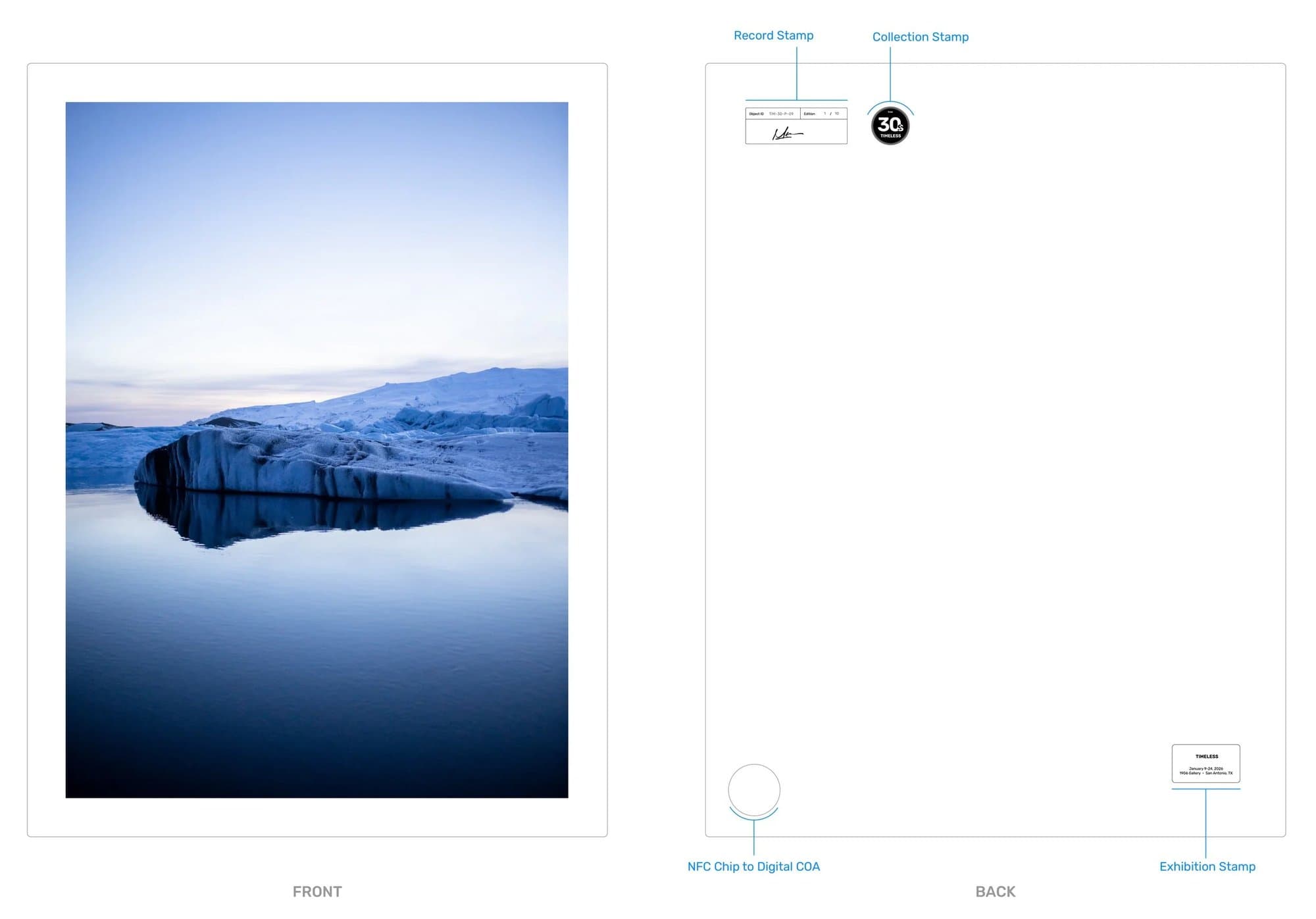
Next, I learned that these stamps have a designated area on an artwork that collectors and museums use to identify the artwork. You’ll notice that I have the NFC chip on the back lower left to not interfiere with the other systems already at play. When the photo is hanging it sits on the bottom right corner of the image.
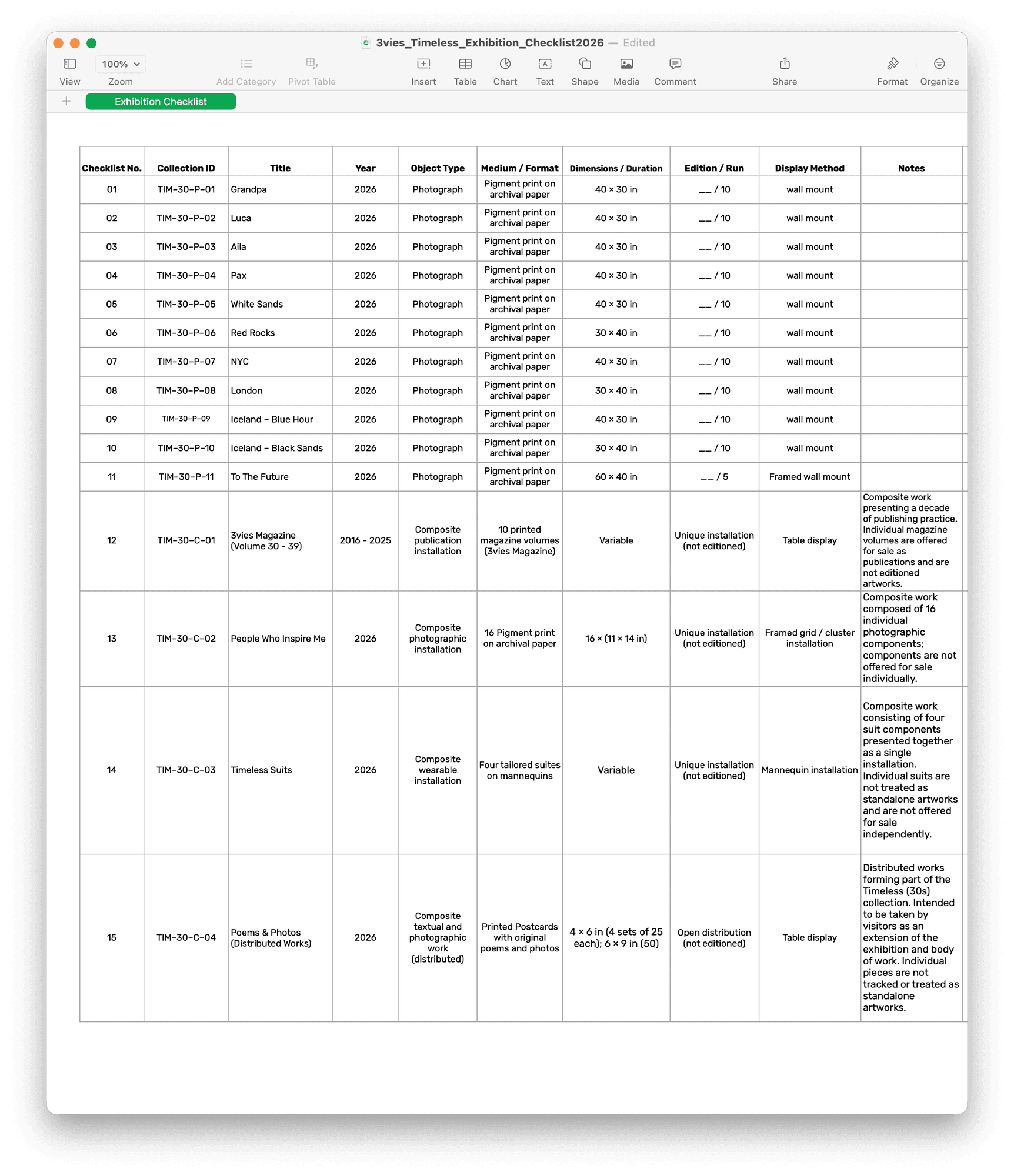
SECOND—I learned about the exhibit checklist. It is like the master file for each exhibit. It is rarely ever known to anyone outside the exhibit team. Its purpose is to help them build and manage the system for naming conventions and details about the pieces themselves. I wanted to share mine and show the level of sophistication and detail that goes into an art experience. Not every project may have this form, but in my desire to connect both old and new art systems, I wanted to understand and build my own system, as I plan to create more collections over time. I felt it would then add to my credibility as I build value in the pieces.
Conclusion
Last year, I earned an Experiential Futures Certificate from IFTF. That course helped me take all the elements I have been exploring, both in my personal and professional life, and bring them together to begin helping people feel the future in a much more tangible way. If you would like to read more details and see behind-the-scenes of making the art, check out the Timeless Exhibit write-up.
If you are interested in learning how I can help you or your company bring your ideas to life, either through an experience internally for your team or board level and C-suite groups, or a more public event to bring engagement with your audience and build a culture of innovation, I would love to talk more. Check out my experience futures offering to read more about my offerings.