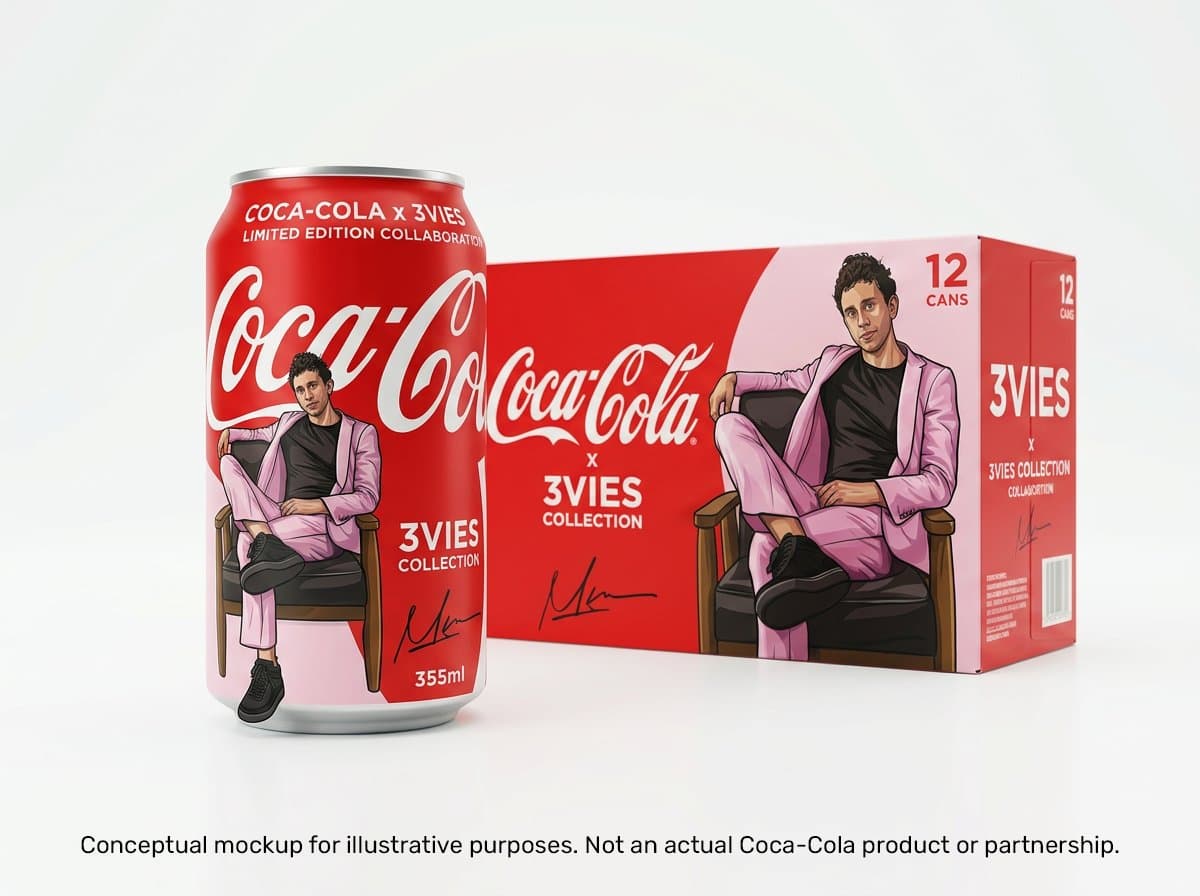
Imagine it’s your best friend's birthday coming up, and you know they love Coca-Cola. So you connect with the Coca-Cola AI, and through a short conversation and a few iterations, you co-design custom cans and packaging, which are set to ship directly to you. Your friend is so excited that they post a video of themselves with a message saying, “Anyone wanting to celebrate my birthday with me can order them too.”
At the end of the day, your friend gets a message from Coca-Cola AI wishing them a happy birthday, and then lets them know that their birthday design got 258,000 interactions across interest media platforms and sold just over 35,000 units! Since they signed the co-creator contract, they will receive 25% of all units sold, deposited into the connected wallet at the end of the week! Now that the birthday gift really is “the gift that keeps on giving.”
This may sound outlandish today, but stick with me and let’s explore emerging futures behind this concept for a minute. This article extends the work I presented in the post-general era article, which showed how we are moving away from creating for the general or average consumer (the foundational mindset of the industrial era), and toward hyper-specific, context-based products and services. Where the culture shifts from wearing name brands to being the name brand. Adding to that base, there is also a shift among digital creators toward the physical world. And that is what lays the foundation for this move from mass-general brands to hyper-specific co-branding between individuals and companies.
On-Demand Micro Co-Branding
Let me first say this isn’t a new thought. It’s already been happening for close to a decade. Today, it requires a creator to already have high attention numbers (followers/views/likes) to move from digital creator to physical goods and co-branding. A great example is Peter McKinnon, a photographer/videographer YouTuber who has partnered with Nordic and polarPro to make camera bags and ND lens filters. He also worked with Insta360 to create a special edition X4 camera kit. Another is Mr. Beast, who went from creating YouTube content to producing game shows for Amazon Prime Video. Not only has he collaborated with brands like Nerf, Starbucks, Jack Link’s, Samsung, and Moose Toys, but he has also created his own brands, such as Feastables and Lunchly. Or like YouTubers Logan Paul and KSI, who leveraged their online presence to create viral demand for their energy drink brand, Prime, which achieved $1.2 billion in sales within the first year.
It’s very clear that digital creators are expanding into the physical realm as well, but my purpose in sharing this is more than just highlighting actions we see today. Understanding the past and present helps expose indicators of potential futures. Yet it requires eyes to see past today. The current model requires creators to build a massive audience, then brand deals follow. This original influencer model was based on brands wanting access to a creator's audience, but what we have seen with the rise of micro-influencers is that follower count does not equal creative talent or customer acquisition. At the same time, social media has been changing, moving from follower-based to interest-based (where entertainment and creative relevance matter). Now put these signals together, and the potential futures become very interesting. Co-branding deals in the social media era reward the already discovered. The future AI co-branding systems concept aligns more with where interest media is heading, rewarding creative/cultural relevance across digital and physical realms.
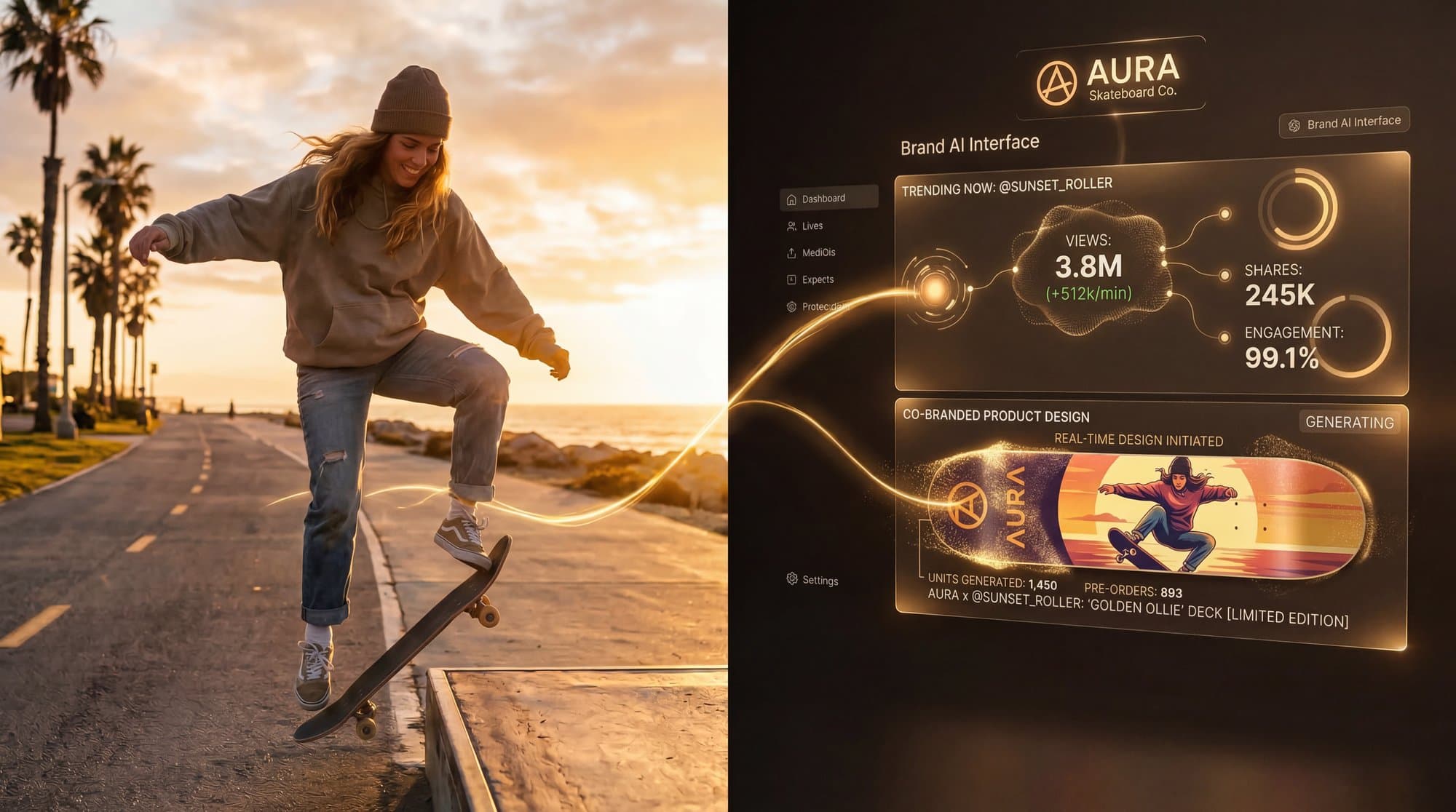
Take, for example, the TikTok video of that guy skateboarding, drinking Ocean Spray, and listening to Fleetwood Mac that went viral. Now, imagine Ocean Spray’s brand AI system sees the video going viral, reaches out to the creator, and together they create co-branded packaging, and the next day, there is a link to order your own bottle. Or a skateboard company reached out and wanted to create a custom board with a link to pre-order. Adding another layer here, perhaps the AI branding system also created digital assets that can live across digital platforms and expand the virality. This can allow brands to capitalize on culturally relevant moments like never before. It’s beyond brand storytelling; it’s universe building. This new landscape is giving rise to creative voices that build their own cultural meaning — ones that brands align with, not the other way around.
The Rise of The Polymath
Let me take you back to 2023, when I was stunned to hear that Pharrell Williams had been named Creative Director of Louis Vuitton Men's. Pharrell didn’t come from a fashion background but was known as a cultural savant—a polymath. That is a person who develops deep, master-level knowledge, skills, and creative fluency across multiple domains and connects them to make something unique and new. But I later discovered it was his predecessor, Virgil Abloh, who shocked the fashion industry when he was named creative director in 2018 and the first Black designer in their 164-year history. Abloh’s background and story are extraordinary. From his formal education as an engineer and then architect to the Fendi internship alongside Kanye West to becoming creative director for Kanye’s agency to building Off-White and designing some of the most iconic collections to becoming the creative director of Louis Vuitton.
Yet, it was the decade before anyone knew his name that really shaped who he would become. Every area he touched, engineering, architecture, DJing, blogging, streetwear, and album art, played a role in building his next step. By the time Louis Vuitton hired him, they weren’t looking for a fashion designer. They were hiring the world he had spent the past two decades building. So hiring Pharrell was a signal that the role of creative director for the fashion house was changing from a specialized designer to curator and dot-connector. But bigger than that, it signifies the move to creators and polymaths being critical partners in this new era.
Just as the major fashion houses are recognizing this shift from designer to culture creators and universe building, large brands are viewing their role shift towards curators of culturally significant creators. It’s very similar to the shift Vogue underwent in the 90s, as Anna Wintour took over as editor-in-chief of US Vogue. Specifically, I’m thinking of her role in helping designer John Galliano, whom she saw as an emerging talent in fashion. She is a curator of talent. She not only helped him secure funding and recruit top models to walk in the show for free, but also gave him credibility in the industry, a value often far beyond funding. That collection he made during 94 Paris Fashion Week was a moment in fashion history.
Looking forward, the next version of Anna Wintour is most likely not a single person but rather an infrastructure of taste makers and polymaths. This is a role I see brands increasingly focusing on. In this next level of co-branding infrastructure, it’s not solely about revenue streams. It becomes auditions and portfolio-building for micro creators, refining their taste-making and sharpening their creative intuitions. Brands start to look beyond the sales and sense the creative instincts and cultural connection they want to bring in-house. Maybe the next Chief Design Officer for Apple doesn’t come from a competitor or a design school, but from a portfolio of collaborations that tap into the next generation voice of a cultural shift.
Hyper-Local Contextual Co-Branding
It’s one thing to have something in stores nationwide, but in reality, this concept becomes much more compelling for the creator in hyper-local situations. Here is an example: a local artist works with the Nike AI Branding system (the next-gen tech behind the current “Nike By You”) and adds custom co-branding. Nike AI generates a webpage on its website for others to order them. Nike could also create a new “digital shelf” in its physical stores, allowing people to see local artists' collaborations unique to each location, but only print them when they are purchased. So purchases in-store become like pre-orders that can be batch-run at the end of the day, then shipped to the store or the customer’s address. The smart mirror next to the digital display uses augmented reality to show you what the shoe looks like on you in the mirror, and can identify which size would fit you best. Lastly, imagine Nike makes your shoe design available for digital purchase on platforms such as NBA 2K, Roblox, or Fortnite. This ties into the personal world-building both creators and consumers desire, as your personal identity begins to live across both digital and physical worlds, especially as digital interoperability becomes commonplace.
Another example would be if my son’s AAU basketball team, Motiv8, used M&M branding AI to design and order custom bags of M&M's featuring their team logo, players' pictures, and inspirational quotes reflecting the team’s ethos. Motiv8 also works with the local grocery store's AI system (let’s say Target) to ensure it is stocked at one local store for the 3-month season. During the season, one of the highlight clips goes viral, and the team ends it with a link to the custom M&M’s, which increases sales. The M&M Branding AI notices the clip and creates a new design incorporating the clip image, and gets it cleared by the team’s delegate AI system. A second local Target store's AI system reaches out to the team, noting the viral video and requesting permission to stock the product as well. Once approved, the new local target is connected with the M&M AI system to fill its orders. Motiv8’s delegate AI system then updates their website and social media pages with both physical stores that stock their custom M&Ms.
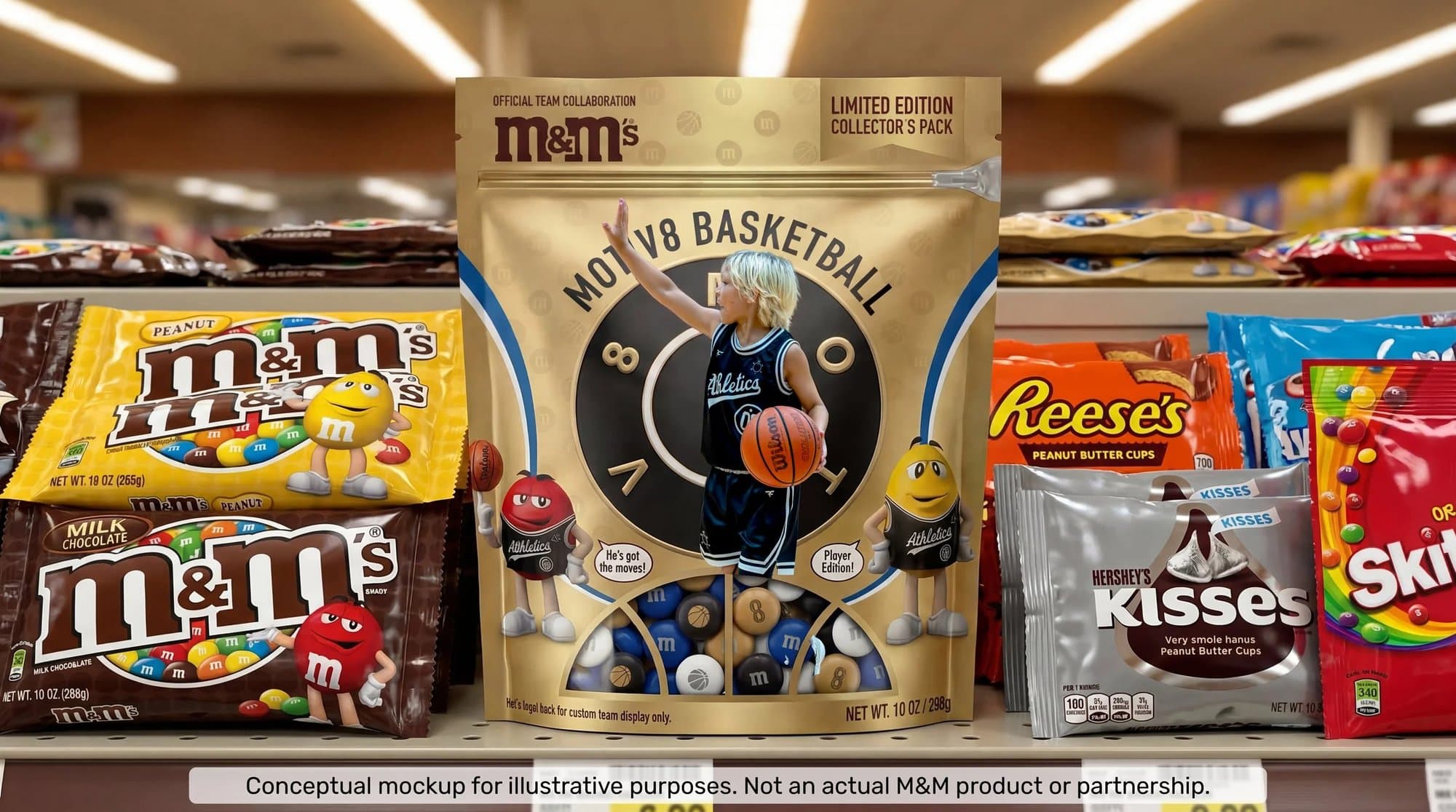
The last thing to mention here is that local Target also uses AI systems that track the city's or neighborhood’s current culture and make suggestions to the store manager for local deals that could drive community engagement. This also speaks to how humans will begin interacting with both humans and synthetic intelligence systems. The example of the new local store interacting with M&Ms' AI system also demonstrates system-to-system communication.
Future Branding AI Interactions Design
Let’s articulate this future Branding AI system. This system will serve as the company's core orchestrator. It contains the brand’s ethos, aesthetic, business understanding, strategy/design guidelines, and persona(s). It’s important to note that most larger brands will house multiple personas, some synthetic, some human representation, such as celebrities, employees, or licensed historical/public figures. This system would also have a collection of contacts for domain SMEs as well as escalation protocols or guidelines. But they are not just for big brands. They will be as common as building your own website.
As I shared in the M&M example, the Motiv8 team also had its own AI Branding system that acted as a delegate and knew when to reach out to a coaching staff member for approval or for clarification on how to respond. Adding to all this is the notion that not only brands but also each physical store should have its own instance, specifically for that store. What an evolution of connected systems. When every creator, from a local basketball team to a global brand, has a system that reflects their creative interests and identity, the conversation stops being about access and becomes about value.
Sharing Profits
I’ve been explaining how much of the systems would function and interact, but underlying all that is a shared earnings system. Much like the app store, which gives 30% of the purchase price to the creator, I see this environment following a similar pattern. Each platform or brand will likely have its own agreements, which will likely be more dynamic. This reminds me of the story of Jordan signing his deal with Nike and including a percentage of sales for his shoe. That was unheard of at the time for athletes' share in the profits, but that one deal changed the industry. I think advancement in AI systems will allow us to create complex subsystems that are beyond human ability to understand their architecture. Just as I don’t think about breathing, yet it keeps me alive every day, we will begin to build subconscious systems that allow us to create product sharing like never before.
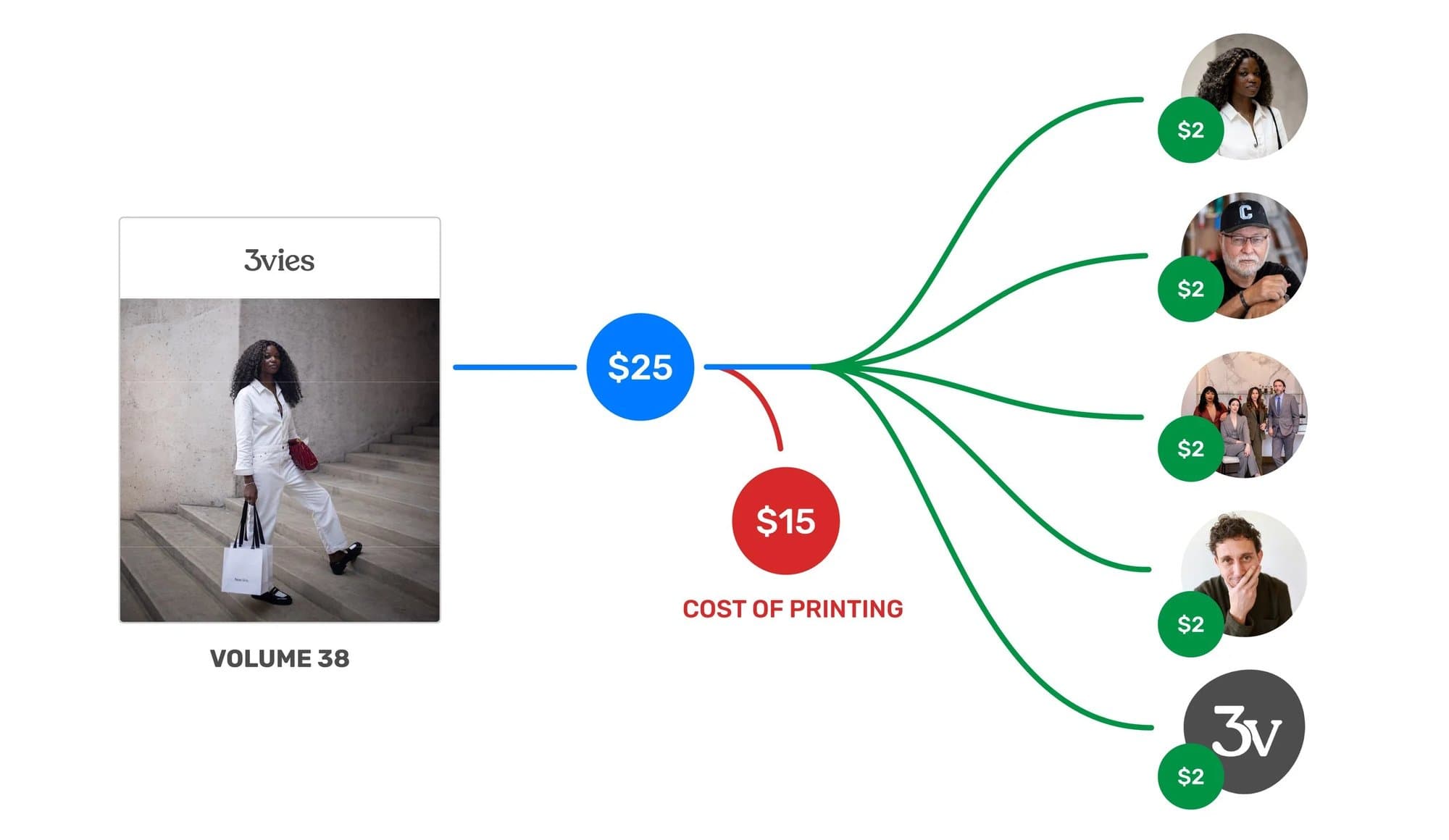
This is something I have wanted to do for my 3vies magazine since I started interviewing other creatives. I want to create a system that allows the featured artist to connect their digital wallet address, and whenever someone buys volume 38, for example, all the contributors (Zola, Carlos, Limatus Bespoke, myself, and 3vies—the company wallet) split the profits through a smart contract. Now, say I continue printing and selling these magazines for the next 40 years. This system allows contributors to receive royalties for the lifetime of a product. Then imagine you work for Apple, and they have this contribution system as well: all your code commits now become micro contributions, so as long as a device ships with your code, you get a fraction of sales. Or say you were an inventor on a patent that the company has granted. If they decide to sell that patent to another company years after you retire, you would still get a portion of the proceeds as a contributor (just like the Jordan example, but for creatives vs athletes). Contribution systems like this begin to change how individuals choose projects.
And I don’t think this just stops at money. In The Future of Value Exchange, which I published last year, I wrote about our economic systems moving from extractive to nourishing. What I mean is we will begin to shift our focus from being purely about profit to being more about adding value over time. Value isn’t just money. It’s also time, love, travel, etc, and it is unique to the individual. We have to begin to retrain how we view and approach building future systems. Profit is extracted from the system. Nourishing is investing in the system and creating sustainability. It’s creating systems where for every amount you take, you give back threefold. Instead of asking “what do you want to be when you grow up?” we can ask “what do you want to explore?” Instead of “how can I monetize this, ” we think “How can I nourish this. How do I help it grow beyond my time?”
Closing Thoughts
In closing, I hope you walk away realizing how exciting the next few decades will be. There has never been a more exceptional time to be alive, especially as a creator. The level of personal exploration and expression is unprecedented. Years from now, your children and grandchildren will look at this time the way we look back on a world without cars, planes, or electricity. Remember, as humans, we explore emerging futures partly to clarify, even if only to ourselves, the future we want to exist so we can then make better decisions today. The future is alive in the current choices we make each day.
Let me end it this way. I have spent the last decade curating an annual physical print magazine in which I write to my children, knowing that it will be 20-30 years (if ever) before they read the little gifts of wisdom I have curated for them. So Aila, Luca, Pax, if you are reading this right now, my life is a witness that tomorrow can always get better if you plant the seed of hope and positivity today. The tools are only getting better. The ability to unlock your creativity and build your world is getting easier. But none of it really matters if you don’t know who you are or what you want to build. Play the long game. Start refining your taste and uncovering your unique voice. Like the example I shared of Virgil Abloh, spend the next decade discovering your own unique viewpoint. At the end of your life, it’s not the number of people who knew you but the amount of yourself you came to know through self-discovery.